Slab Calculator
Driveways, patios, garage floors, shed bases and flat pads.
Calculate volume, ready-mix bags, waste allowance and estimated cost for slabs, footings, post holes, walls and more. Fast, free and built for phones.
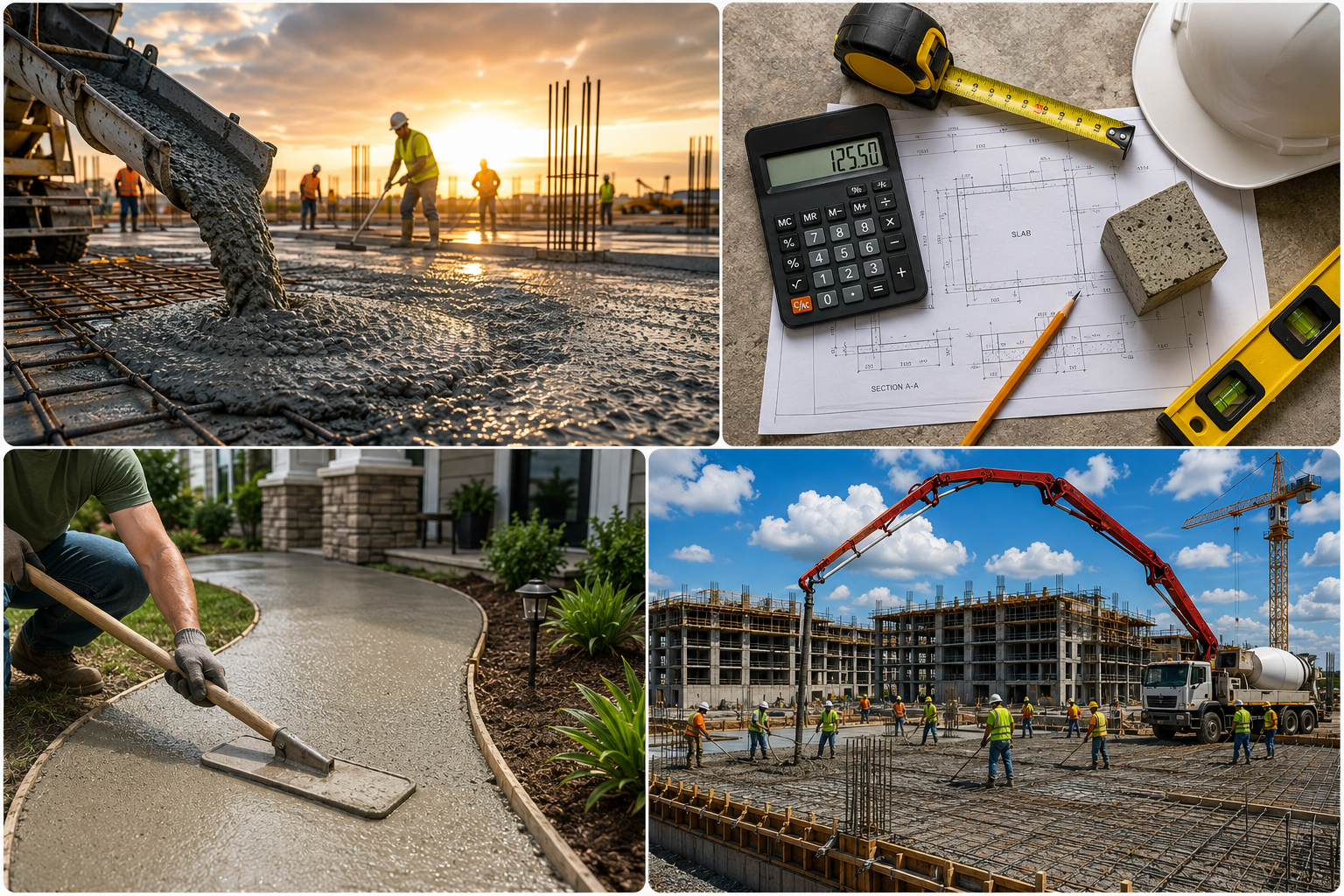
Every calculator uses the same clear workflow. Enter the dimensions, add a sensible waste allowance and get volume, bags and cost.
Driveways, patios, garage floors, shed bases and flat pads.
Continuous strip footings and foundation trenches.
Fence posts, deck posts, signs and mailbox posts.
Concrete walls, retaining walls and foundation walls.
Round or square concrete piers and columns.
Estimate concrete for a simple solid staircase.
Convert your required volume into 40, 60 or 80 lb bags.
Estimate grid bars and total linear feet for a slab.
Estimate ready-mix or bagged concrete project cost.
Enter the slab dimensions below. The estimate includes your chosen waste allowance.
This is a planning estimate, not a structural specification. Confirm dimensions, mix requirements, reinforcement, access and supplier minimums before ordering.
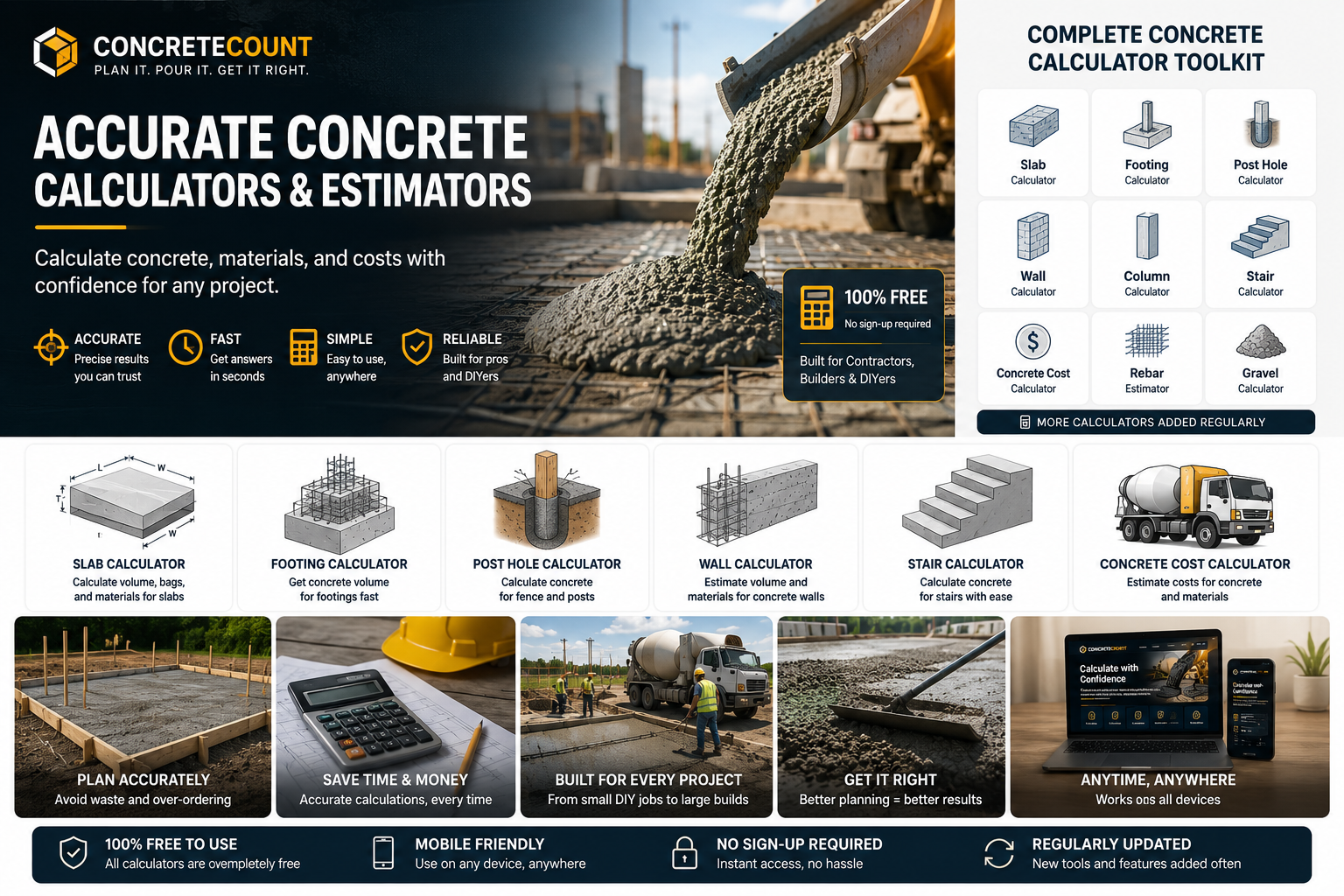
Concrete is expensive to over-order and disruptive to run short on. ConcreteCount gives you a transparent starting estimate, with waste, bags and price shown separately.
Five percent may suit neat formed work. Ten percent is a safer general allowance. Irregular excavation may need more.
Patios and walkways are often around 4 inches. Vehicle loads, poor ground or local requirements may demand more.
Bags suit small jobs. Ready-mix usually makes more sense once the bag count, labour and consistency become impractical.
Remove soft material, compact the base and make sure the formwork is square, level and firmly supported.
Confirm access, labour, weather, tools, finishing method and where any leftover concrete can safely go.
Concrete gains strength through curing. Protect fresh work from rapid drying, freezing, heavy rain and premature loading.
Multiply length by width by thickness using consistent units. Convert the result into cubic yards or cubic metres, then add waste.
Approximately 45 bags at a typical yield of about 0.60 cubic feet per bag. Product yield varies, so check the bag label.
Ten percent is a useful general planning allowance, but neat forms may need less and rough excavations may need more.
No. It estimates material quantity only. Structural dimensions, reinforcement and mix specification should follow approved plans and local requirements.
Suppliers may round loads, apply minimum quantities, use different bag yields, add delivery charges or recommend extra allowance based on the project.